Lake Jackson's Sea Center Texas Is a Free Aquarium Built Around a Redfish Hatchery
The state-run center opened in 1996 after red drum crashed along the coast. Admission is free, and hatchery tours are offered by reservation.
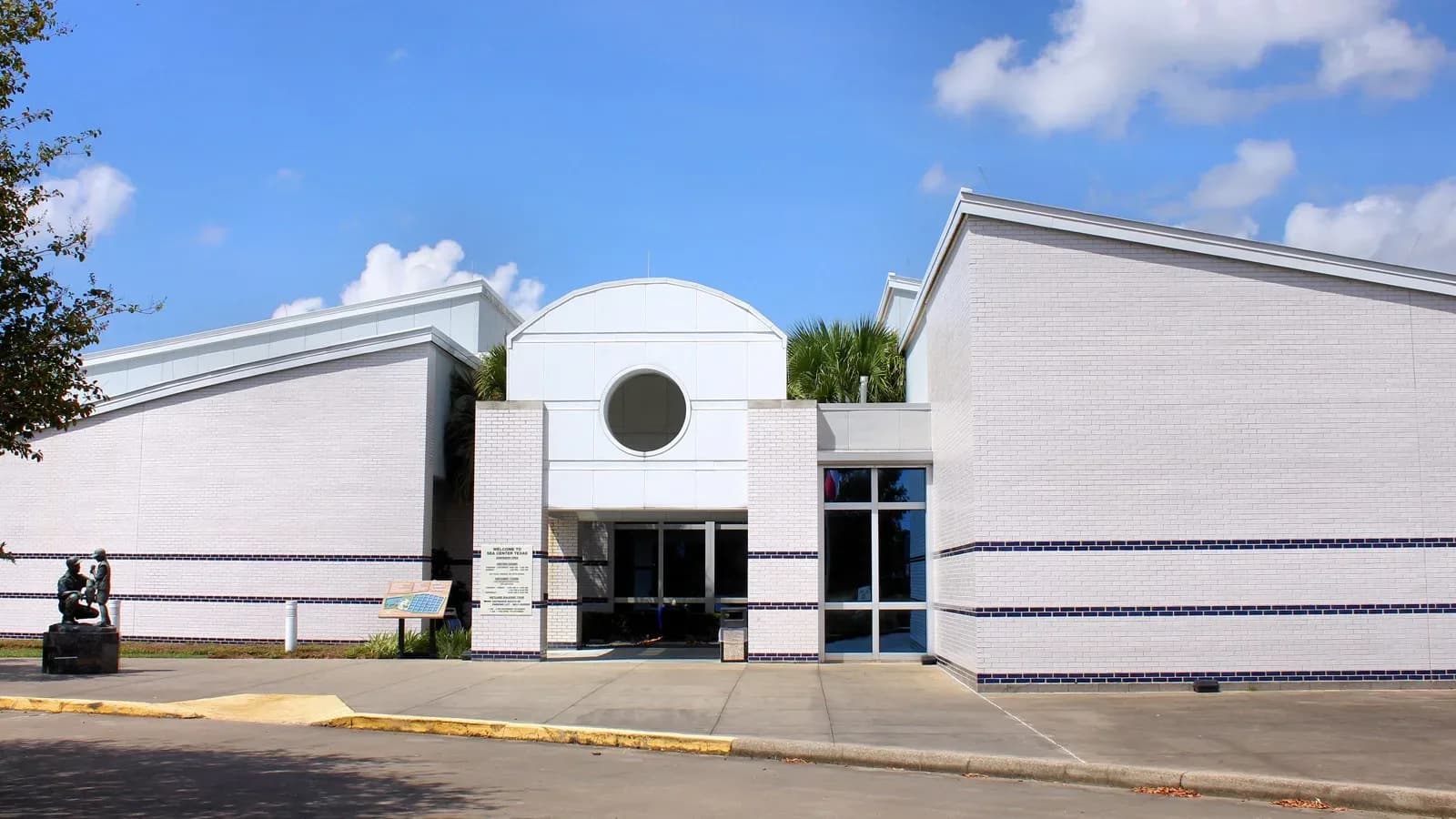
If you want to see a 1-millimeter redfish egg become a fish headed for a Texas bay, Lake Jackson has a place for that, and it costs nothing to get in. Sea Center Texas is a marine aquarium, fish hatchery and education center run by the Texas Parks and Wildlife Department, according to its visitor information page.
The center sits on 75 acres and opened in 1996. TPWD runs it in partnership with the Coastal Conservation Association, The Dow Chemical Company and U.S. Fish and Wildlife Service Sport Fish Restoration funds.
What visitors see
The visitor center has aquariums and exhibits of Texas marine life. The grounds include what TPWD calls the largest redfish hatchery in the world, 36 one-acre fish ponds, an outdoor wetland exhibit and a youth fishing pond.
In the lobby, fiberglass replicas of state-record saltwater fish hang overhead. TPWD says the 25 mounts include bay fish like flounder, black drum and red drum, and offshore fish like blue marlin, tarpon and red snapper, along with several large sharks.
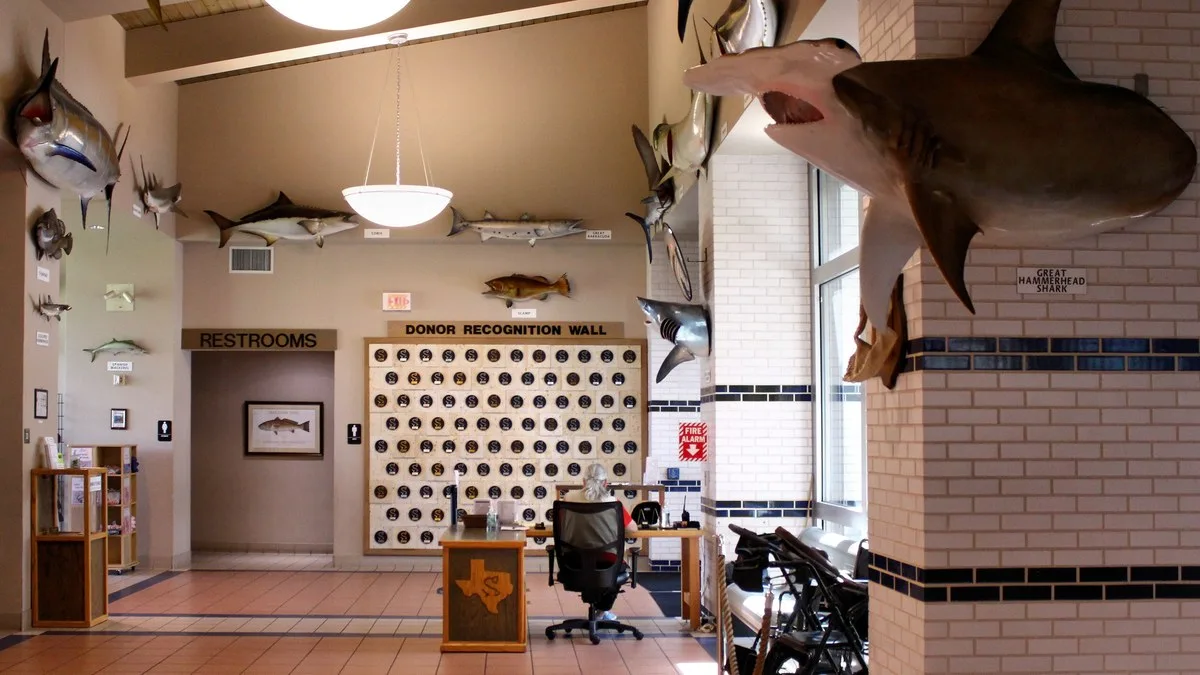
Replicas of Texas state-record saltwater fish in the lobby of Sea Center Texas, photographed in 2023. Photo: Larry D. Moore / Wikimedia Commons, CC BY 4.0.
Why the hatchery exists
The hatchery page tells the story. In the 1970s and early 1980s, extreme winters and overharvest by commercial and recreational fishermen had decimated red drum. TPWD built its first marine hatchery in Corpus Christi in 1982 and first stocked red drum in Texas bays in spring 1983. In 1985, Dow, the CCA and TPWD pooled their resources and planned a red drum hatchery and education center in Lake Jackson.
Today, TPWD says, red drum and spotted seatrout populations are stable. Its marine hatcheries raise about 25 million young red drum, spotted seatrout and southern flounder a year for release into the wild. Sea Center Texas produces about a third of the red drum and half of the spotted seatrout stocked, and has a production goal of 15 million fingerlings a year. The page also says the center released 25,000 flounder fingerlings into area bays last year.
The process is simple to describe. Adult fish spawn in tanks, the eggs hatch in incubators, and the tiny larvae grow in ponds for one to two months before they are hauled to the bays.
Plan your visit
Sea Center Texas is at 302 Medical Drive in Lake Jackson, about 50 miles south of Houston and 45 miles southwest of Galveston, according to the hours and location page. Admission is free, though donations are welcome. Hours are 9 a.m. to 4 p.m. Tuesday through Saturday and 1 to 4 p.m. on Sunday. It is closed Mondays and on several holidays, including Thanksgiving Day, Christmas Eve and Christmas Day. Call 979-292-0100 to confirm hours.
Hatchery tours last about 45 minutes and need a reservation. They are offered at 9 a.m., 11 a.m., 1 p.m. and 2:30 p.m. Tuesday through Friday, and at 10 a.m. and 2:30 p.m. Saturday. No food is sold on site, though TPWD points to picnic areas nearby at McLean Park. One note for families: the center says pond construction means it will not host public fishing events in 2026.
For more on the Texas coast this fall, see which bays opened for oysters and the flounder closure.
Our view
Sea Center Texas is a good example of people taking care of what they were given. When redfish nearly disappeared, a state agency, a company and an anglers' group worked together instead of waiting on someone else. Stewardship of creation is a Christian duty, and this is what it looks like in practice.
It is also a free outing that families can take on a Saturday, and children leave knowing where the fish on their plate come from.