

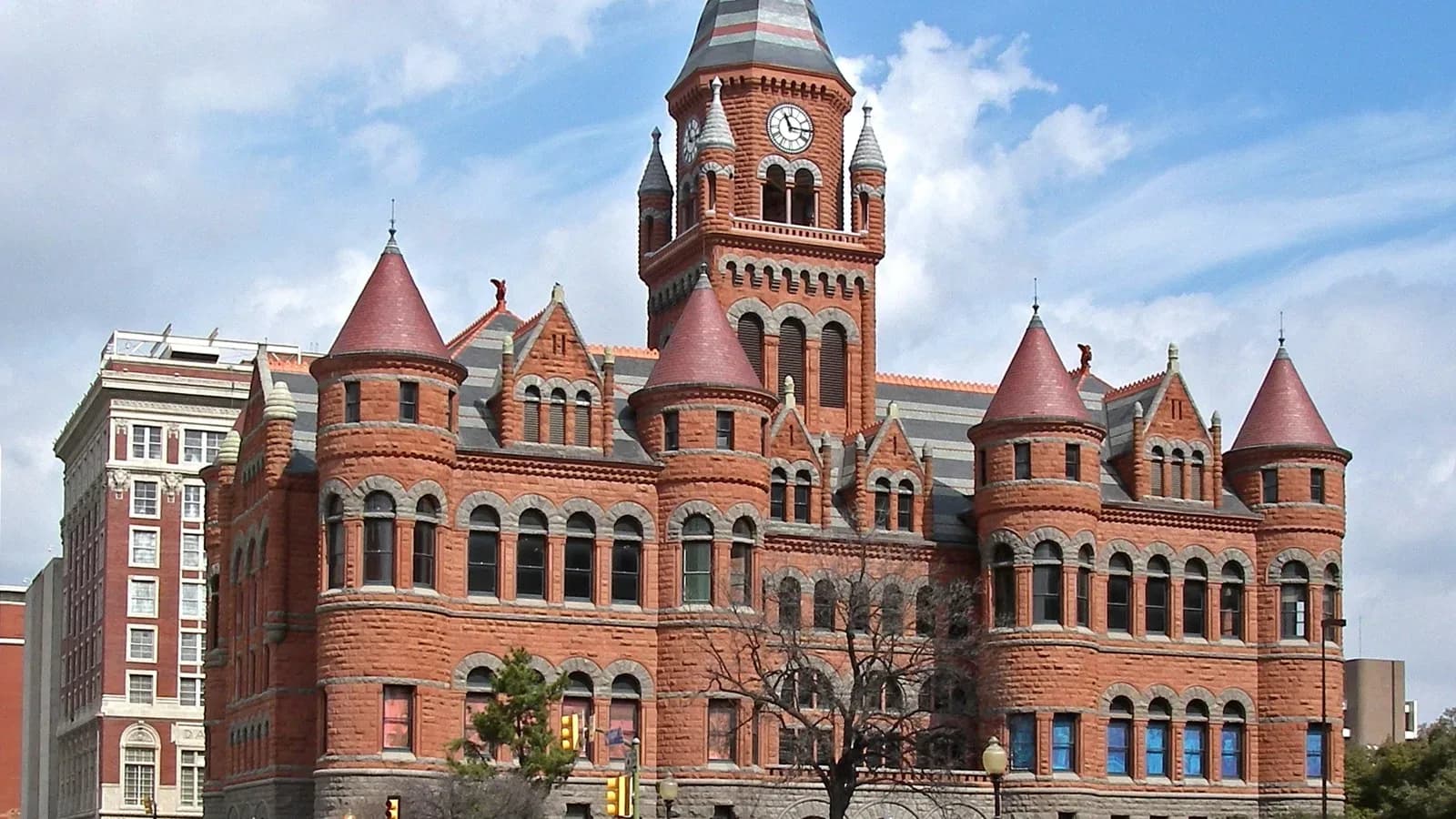
Dallas County Voters Decide Today on a 2.4-Cent Tax for Homelessness Programs
Proposition A would fund about $100 million a year in homelessness, housing and mental health programs. It would cost $84 a year on a $350,000 home over the alternative rate.
Election Day preview: Dallas County voters decide today, Tuesday, Nov. 3, whether to pay a higher county property tax rate to fund homelessness programs, mental health treatment and housing help. Polls are open 7 a.m. to 7 p.m.
The question is a tax rate election. Commissioners adopted a rate 2.4 cents above the rate the county can set without asking voters, and state law sends that extra amount to the ballot.
What the ballot says
The county's signed election order lays out the numbers. The adopted rate is $0.248650 per $100 of taxable value. The voter-approval rate is $0.224650, and last year's rate was $0.215500. The ballot asks voters to approve the higher rate "for the purpose of funding programs that measurably reduce homelessness and resolve encampments," support homeless people in reaching self-sufficiency, increase access to mental health treatment and support programs that provide stable housing. The ballot is printed in English, Spanish and Vietnamese.
If voters say no, the order says, the county rate falls back to the voter-approval rate.
What it costs a homeowner
The county's tax rate election fact sheet puts the difference between the two rates at $24 a year on a $100,000 taxable value, $84 on $350,000 and $240 on $1 million. Compared with last year's rate, the election order says a $350,000 average home would pay $116.03 more a year for the county's share.
The fact sheet says the budget at the higher rate would raise an estimated $1.58 billion, including $102.9 million from the tax rate election. It says the programs would begin Jan. 1, 2027, carried out by Housing Forward and the All Neighbors Coalition.
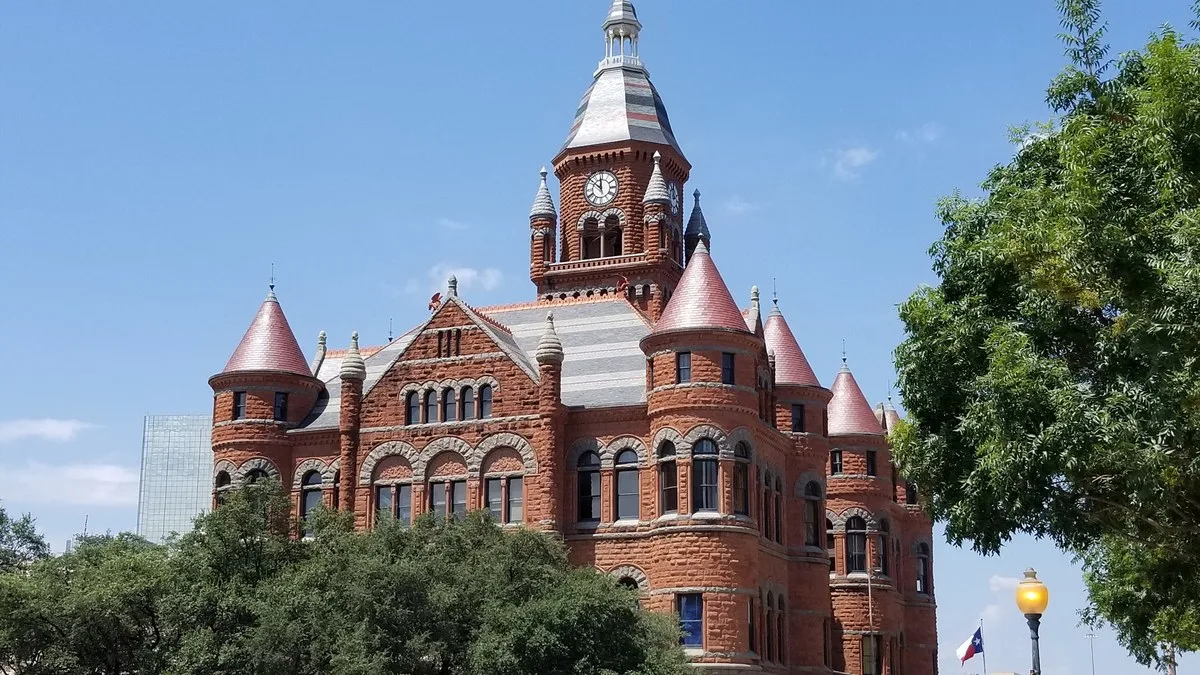
Old Red, the former Dallas County Courthouse, photographed in 2017. Photo: Martin Alon / Wikimedia Commons, CC BY-SA 4.0.
What the money would buy
The All Neighbors Coalition proposal presented to commissioners Aug. 11 budgets about $99.6 million a year for its homelessness work. The biggest piece is $67.6 million for transitional help for 2,350 households, figured at $28,800 each. It also lists $20.1 million for intake and diversion hubs, $7.9 million for supportive housing for 275 households and about $4 million to keep 2,160 households from becoming homeless in the first place.
The coalition says the money would help about 4,500 more households a year and aims to end a household's homelessness in an average of 65 days. It says street homelessness has fallen 25 percent since 2021. The plan also calls for patrolling public spaces after camps are cleared. The county would sign a five-year contract with the lead agency, with an independent review committee watching the money.
According to KERA, commissioners voted 3-2 on Aug. 11 to put the measure on the ballot, with Commissioners John Wiley Price and Elba Garcia voting no. "The voters deserve a well-designed plan with measurable objectives and that is what is not there," Garcia said, KERA reported. KERA also reported that public safety pieces in the original proposal, such as crisis training for officers, were taken out of the ballot language, and that County Judge Clay Lewis Jenkins said the county should "only charge what is necessary."
How to vote today
Dallas County votes at vote centers. The Dallas County Elections Department lists Election Day hours as 7 a.m. to 7 p.m. and offers a Vote Center Finder and sample ballots on its site. Voters in line by 7 p.m. can vote. The department's in-person voting page lists the seven accepted forms of photo ID and what to do without one. A completed mail ballot may be hand-delivered to the Elections Office while polls are open, with ID.
For more Dallas County election coverage, read about Garland's tax rate vote and Duncanville's downtown plans.
Our view
Caring for the poor and the sick is a Christian duty, and nobody should want people sleeping under bridges. But a good cause is not a blank check. This plan asks taxpayers for about $100 million a year and locks in a five-year contract. Two commissioners said the goals were not measurable enough. Voters should weigh the need, the price and the track record, then decide with a clear conscience.
More Politics & Government Stories
 Today
Control of Congress Is on the Ballot Today. Here Are the Races to Watch and When Polls Close. Choose Character, Then Be Patient.
 Today
Beyond the Top of the Ticket: The Texas House, Senate and Congressional Races Most Likely to Change Hands Today
 Today