Montgomery County Asks Austin for Power to Regulate Growth in Unincorporated Areas
Commissioners unanimously asked state lawmakers for limited ordinance authority over development in the 78 percent of the county outside city limits. The guardrails will matter.
Montgomery County commissioners voted unanimously on Oct. 8 to ask the county's state lawmakers for something Texas counties do not have today: the power to pass local ordinances governing development and land use in unincorporated areas. The request comes as a resolution, not a law, and it will land in Austin when the Legislature convenes in January 2027. But it marks a notable shift for a county that has long sold itself on light regulation, and residents should read the fine print before anyone in Austin starts drafting.
What the court actually approved
The resolution, posted in the court's Oct. 8 agenda packet, states that "approximately 78 percent of Montgomery County is unincorporated," leaving most of the county without the planning tools that cities inside the county already use. It goes on to say growth is placing "increasing demands on roads, utilities, public safety services, drainage and other public infrastructure."
"The current pace and scale of growth are outstripping the county's ability to provide and expand infrastructure and public services."
The court asks the Legislature for "limited authority to adopt and enforce local ordinances addressing development and land uses in unincorporated areas when reasonably necessary to protect public health and safety, infrastructure and utility capacity, natural resources, neighboring property, and the county's established quality of life."
The document also lays out guardrails the court says any new law should include: authority that is "clearly defined and appropriately limited, with safeguards for private property rights, fair notice, public participation, due process, and consistent application." It says the county "does not seek unrestricted or unlimited regulatory power," that city authority inside incorporated areas should be preserved, and that the resolution "does not itself adopt or enforce any land-use regulation or ordinance."
According to Community Impact, which covered the meeting, the vote was unanimous, which the Houston Chronicle and The Magnolia Standard also reported, and the resolution is being sent to every state representative and senator who represents Montgomery County.
Why the county says it needs this
Texas counties are creatures of the state. They hold only the powers the Legislature gives them, a point the resolution itself makes. As Community Impact reported, a county can set certain safety and drainage standards for developers under the Local Government Code, but it cannot zone or decide where development may occur. Cities can. The Houston Chronicle notes counties today may regulate only specific subjects the Legislature has granted, such as sexually oriented businesses, solid waste, floodplains and road and drainage construction. That gap matters in a county where most land sits outside city limits and new subdivisions keep coming.
Precinct 4 Commissioner Matt Gray said the aim is not to turn against builders. "This is a pro-business friendly county. We're not changing our position on that," Gray said, as quoted by Community Impact. "Our position is not only to look after our residents and look after the county, but it's to protect your property investments, your property rights and the life you built here."
County Judge Mark Keough made a similar point, according to Community Impact. "Our land owners and those who are purchasing land as developers are all stakeholders in what we do here in Montgomery County," Keough said. "It has to work for everybody."
Analysis: The questions taxpayers should ask
The following is Dock Line analysis.
Few residents would argue the county has no growth problem. Responsible stewardship of roads, water and drainage is a legitimate duty of government, and the court is right to say infrastructure should keep pace with growth.
But conservatives have good reason to be careful with any request that expands government power over private land. The resolution speaks of protecting the county's "established quality of life," and phrases like that phrases that can stretch a long way once they are written into law. Limited authority has a way of becoming broad authority over time. The court's own safeguards, property rights, notice, due process and public input, are the right ones. The test will be whether they survive into actual bill language, and whether the bill defines what the county may regulate as tightly as the resolution promises.
Residents should also notice what the resolution does not say. It names no specific ordinances the county wants to pass, no enforcement mechanism, and no penalties. Those details will matter more than the preamble.
What comes next
The next regular session of the Texas Legislature is scheduled to begin Jan. 12, 2027, according to Community Impact and The Magnolia Standard. Any bill would need a sponsor from the county's delegation, committee hearings and votes in both chambers. The full Oct. 8 meeting is available in the county's video archive, and the court's next regular meeting is Oct. 22, per the county's posted schedule.
Dock Line will follow this request to Austin and report what any bill actually says. Residents who own land in the unincorporated county, which is most of it, have the most at stake and should make their views known to their commissioner and their state lawmakers before the session begins.
Related from Dock Line
Growth Is Outrunning Montgomery County's Rulebook. Commissioners Want Austin to Change It.
Willis Is Building Thousands of Homes While the Roads Are Still Waiting
Part 2: The Houses Are Coming. Who Pays for the Roads, Water and Drainage?
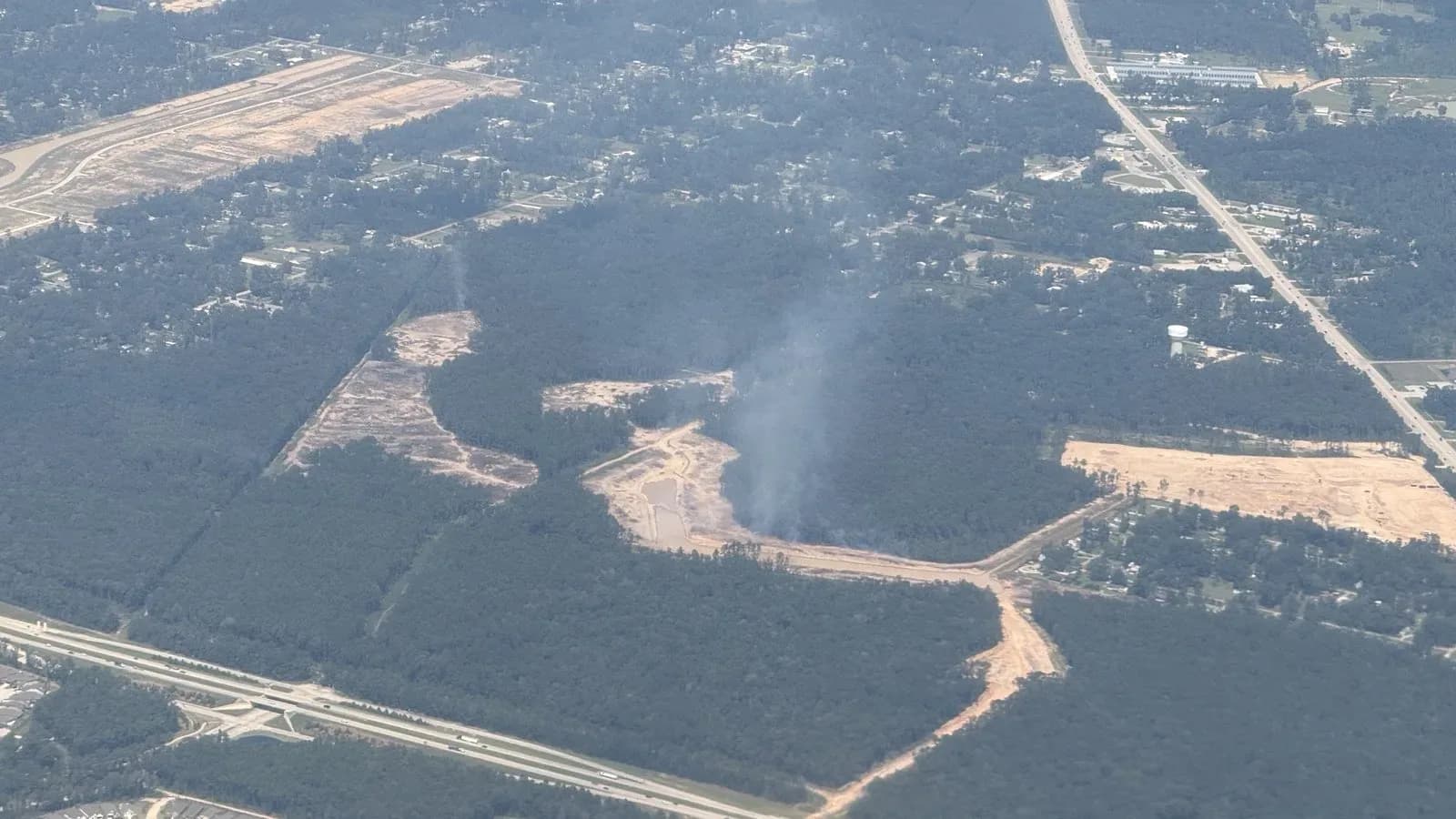
Hero photo: Aerial view near Porter Heights, Montgomery County, by Famartin via Wikimedia Commons, licensed CC BY-SA 4.0; cropped and resized.